About the project:
YSD partnered with MOMENTUM Country and Global Leadership to strengthen youth capacity to accelerate the implementation of youth-led social accountability and contribute to the evidence, learning, and documentation on youth-led social accountability for quality FP/RH service delivery.
In this project, the youth hold public officials and service providers accountable for the provision of their entitlements, including quality, equitable, and accessible health care, health education, and other social protection schemes.
YSD works in 20 facilities in four sub-counties of Machakos County to conduct assessments, generate action plans, and support progress of identified gaps. This includes rural (13), urban (3), and peri-urban (4).
More Information:
This youth-friendly report includes videos, interactive graphics, and stories that summarise the activities, learning, and impacts of a partnership between MOMENTUM Country and Global Leadership and two youth-led organisations to advance youth-led social accountability learning and practice. With MOMENTUM’s organisational and technical capacity development assistance, Youth Advocacy on Rights and Opportunities (YARO) in Ghana and Youth for Sustainable Development (YSD) in Kenya led social accountability activities to improve the quality of adolescent and youth sexual and reproductive health services and conducted learning exercises to contribute to the global evidence on youth-led social accountability.
Find out more by exploring the report here: Youth-Led Social Accountability for Health – USAID MOMENTUM
Youth-Led Social Accountability Model
YSD is implementing a four-pronged model of youth-led activities:
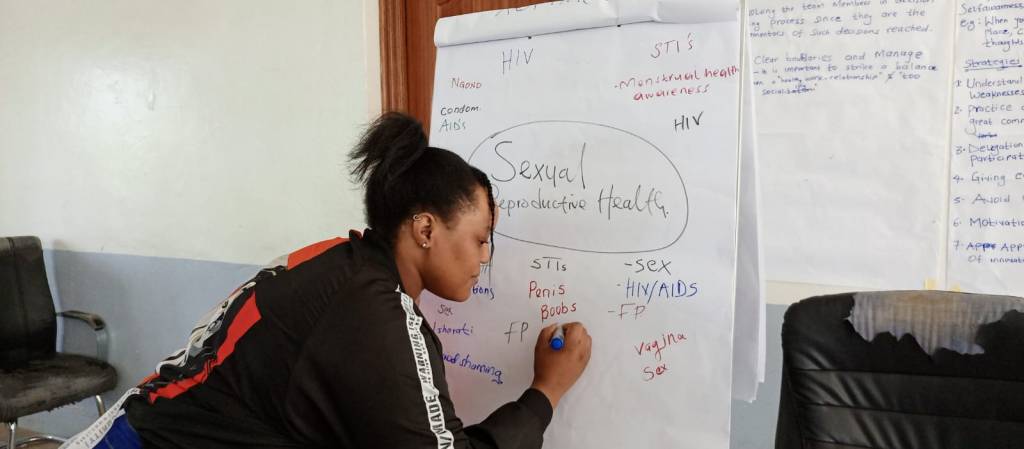
- Increase awareness about the sexual and reproductive health (SRH) rights and entitlements of young people among various stakeholders, including the youth themselves, community members, opinion leaders, policymakers, and health staff. This will be achieved through various means such as awareness sessions, radio broadcasts, online campaigns, drama, debates, and other interactive platforms.
- Implement a youth-led community scorecard approach, allowing young people to actively participate in evaluating and improving SRH services. This approach involves engaging the community, opinion leaders, policymakers, and health staff in the assessment of services through feedback mechanisms.
- Coordinate the response to action plans that are developed through the community scorecard process. This includes facilitating interfaces, dialogues, and follow-up meetings with ministry counterparts and other stakeholders to ensure that the identified actions are implemented effectively.
- Understand the functioning of youth-led social accountability mechanisms and their impact on family planning/reproductive health (FP/RH) services for young people. This includes exploring how these mechanisms can positively influence different dimensions of Positive Youth Development through collaborative efforts, learning opportunities, and adaptive exercises.

 Youth for Sustainable Development (YSD)